
Driveways & Patios
New and Replacement Concrete Driveways and Patios
Poured, finished, and jointed properly for an Iowa winter. Waukee-based.
Replace it, or live with it?
Not every bad-looking driveway needs replacing. Some do, and patching them is throwing money away.
The question isn’t how it looks. It’s what’s happening underneath and why.
- Surface-level damage — scaling, light spalling, surface cracks that aren’t moving. Often repairable. Replacing is overkill.
- Structural cracking — cracks with a height difference across them, or that keep opening. The concrete is moving. Filling it hides the symptom for a season.
- Settlement — sections sitting lower than they were. That’s a base problem, not a concrete problem, and new concrete on the same bad base will do the same thing.
- Age plus salt — decades of de-icer eats the surface from the top down. Once the aggregate is exposed across the surface, it’s past sealing.
We’ll tell you which one you have — including when the answer is “leave it another few years and save your money.”
Where flatwork actually fails
The base matters more than the concrete
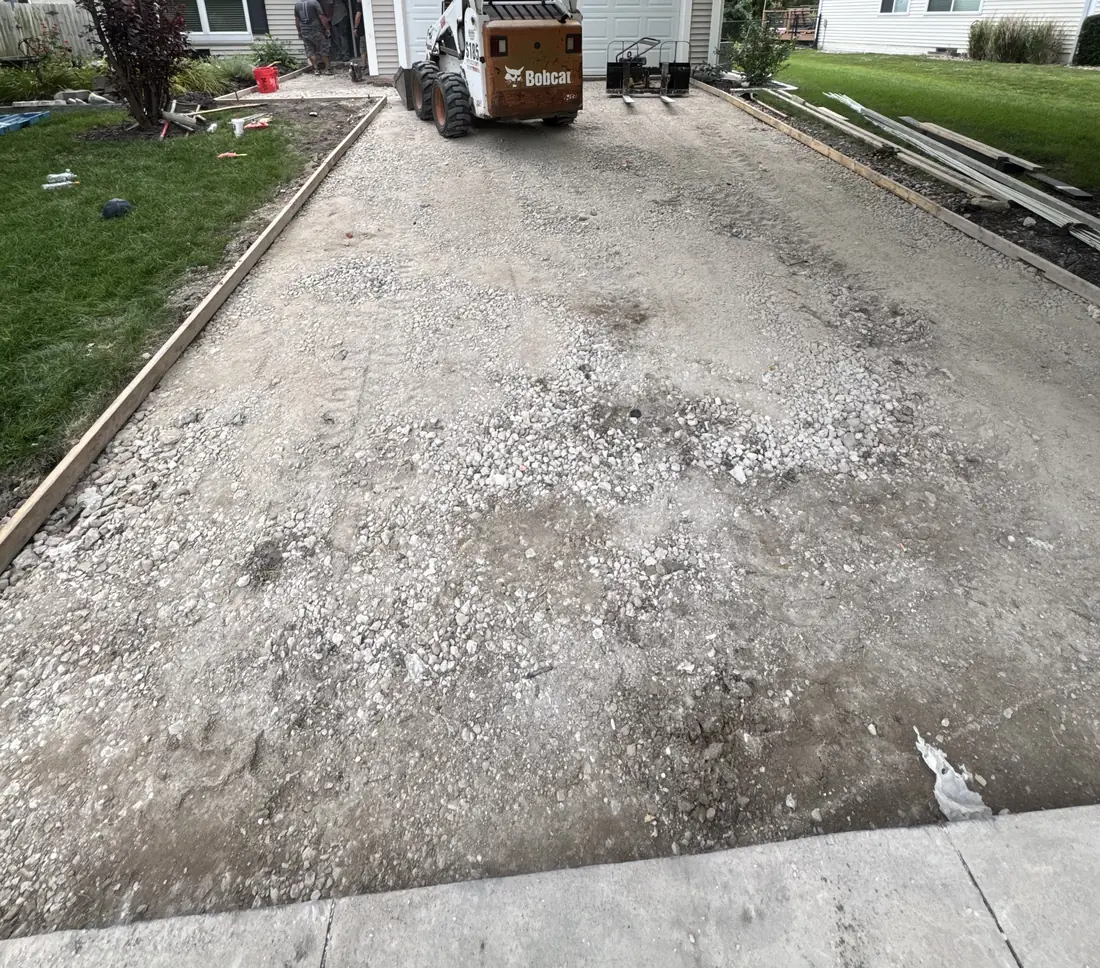
A driveway is only as good as what it sits on. Poor compaction, the wrong fill, or no drainage will crack a perfectly good pour within a few winters — and it will crack in a way no repair fixes.
So the parts of this job that decide whether it lasts happen before any truck shows up:
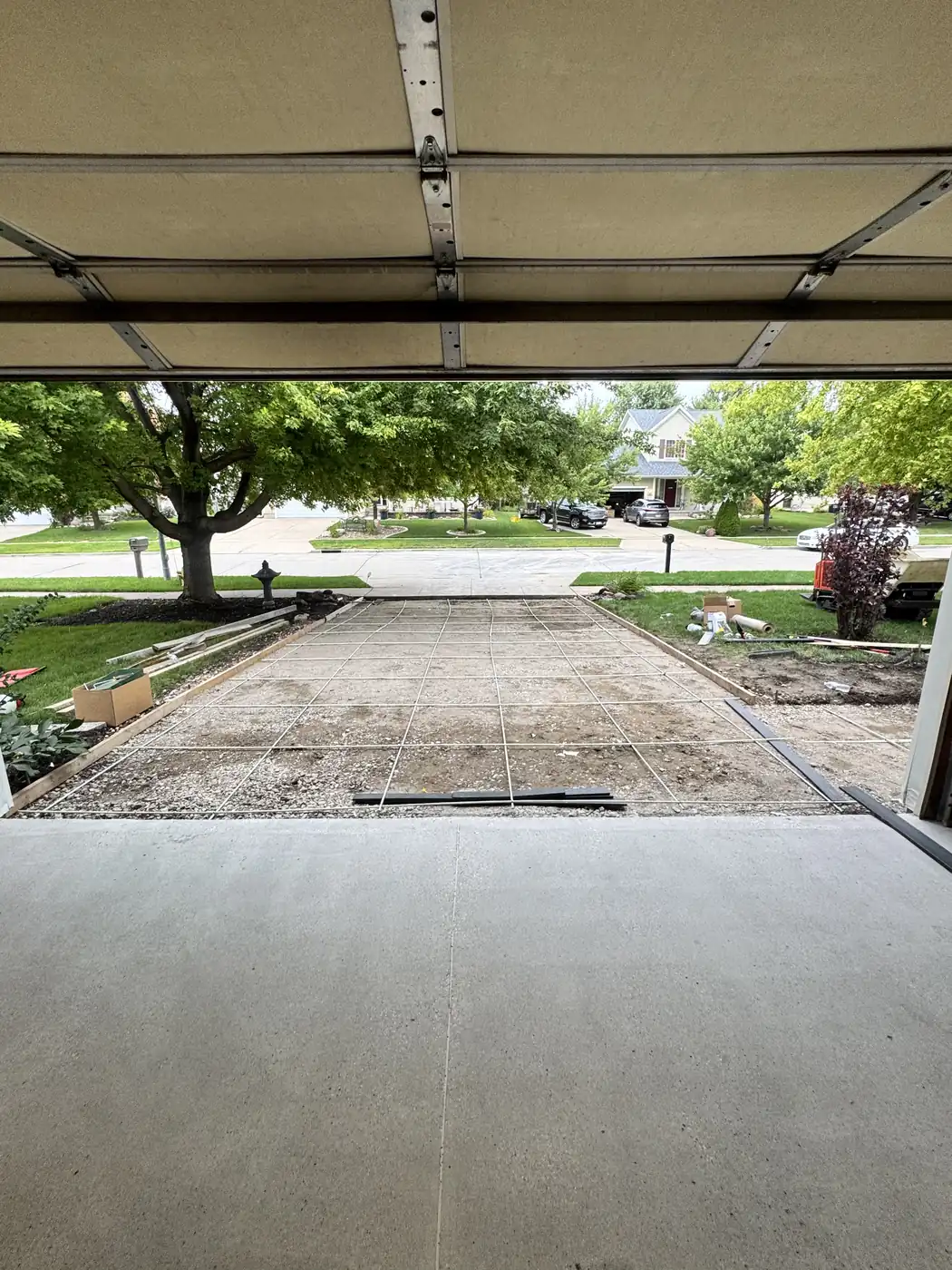
- Tear-out and haul-away of the old concrete, down to a clean subgrade.
- Base preparation — the right granular fill, compacted in lifts, not dumped and leveled.
- Drainage and slope — water has to leave. Water that sits against or under concrete is what freeze-thaw uses to break it.
- Reinforcement and thickness sized to what actually drives on it. A driveway that takes a loaded truck is not the same pour as one that takes two cars.
The mix is not a detail
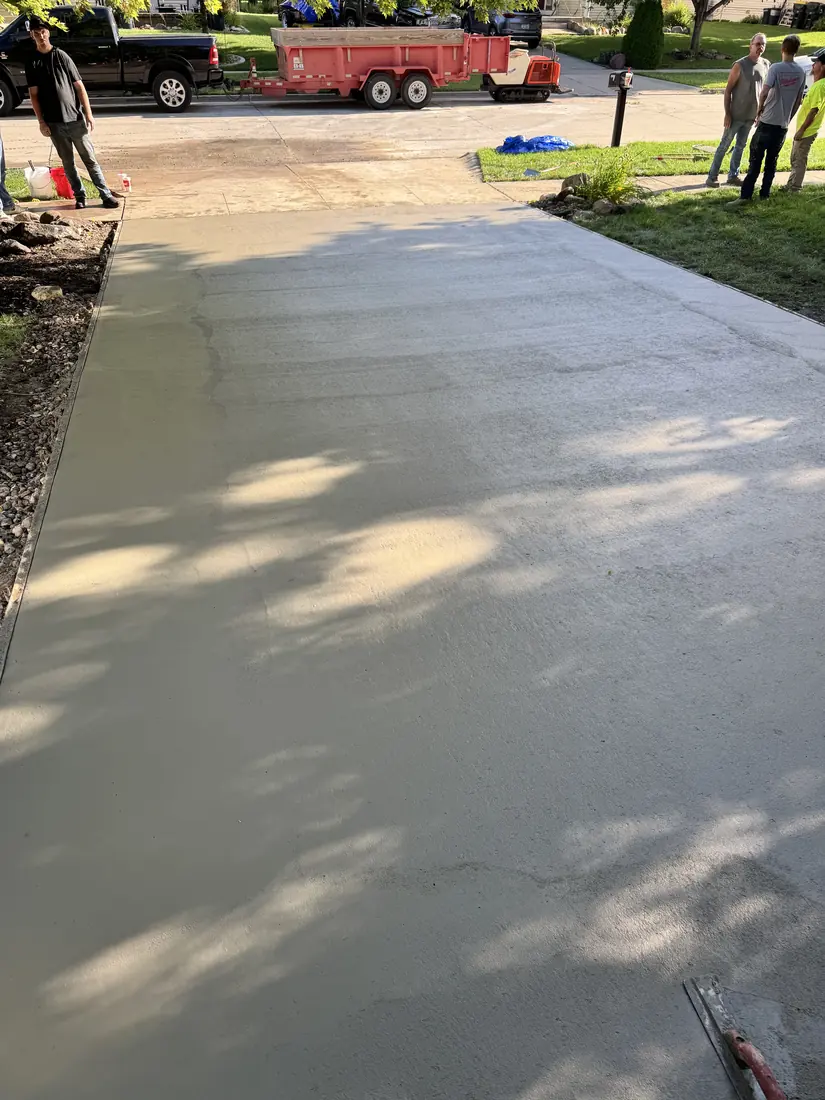
Concrete in Iowa has to survive freeze-thaw and de-icing salt. What’s in the truck decides whether it does.
We spec the mix for the job and check it on site — air content, slump, and placement temperature — rather than taking whatever arrives. Air entrainment in particular is what gives concrete somewhere to put the pressure when water in it freezes. Without enough of it, exterior concrete in this climate scales, and no finish or sealer prevents that.
Then it gets cured, not just left. Concrete that dries too fast is weaker at the surface for the rest of its life, and the surface is the part that takes the salt.
Not sure whether yours is worth saving?
Send us a photo of what you’re looking at and we’ll give you a straight answer — including the times when the honest answer is to leave it another year.
Request a free estimate or call 515-842-8402
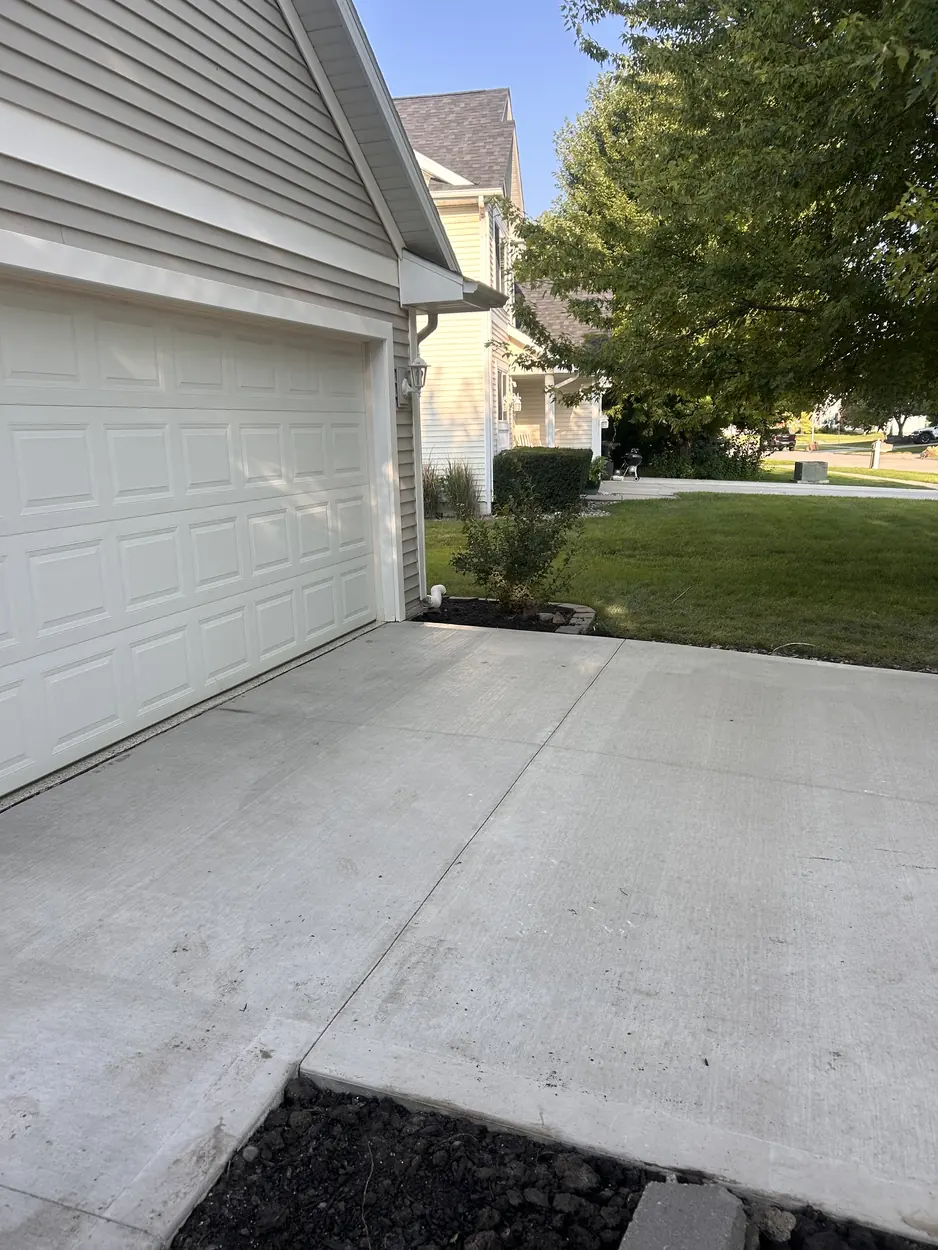
Control joints, and why your driveway will crack
All concrete cracks. The job is deciding where.
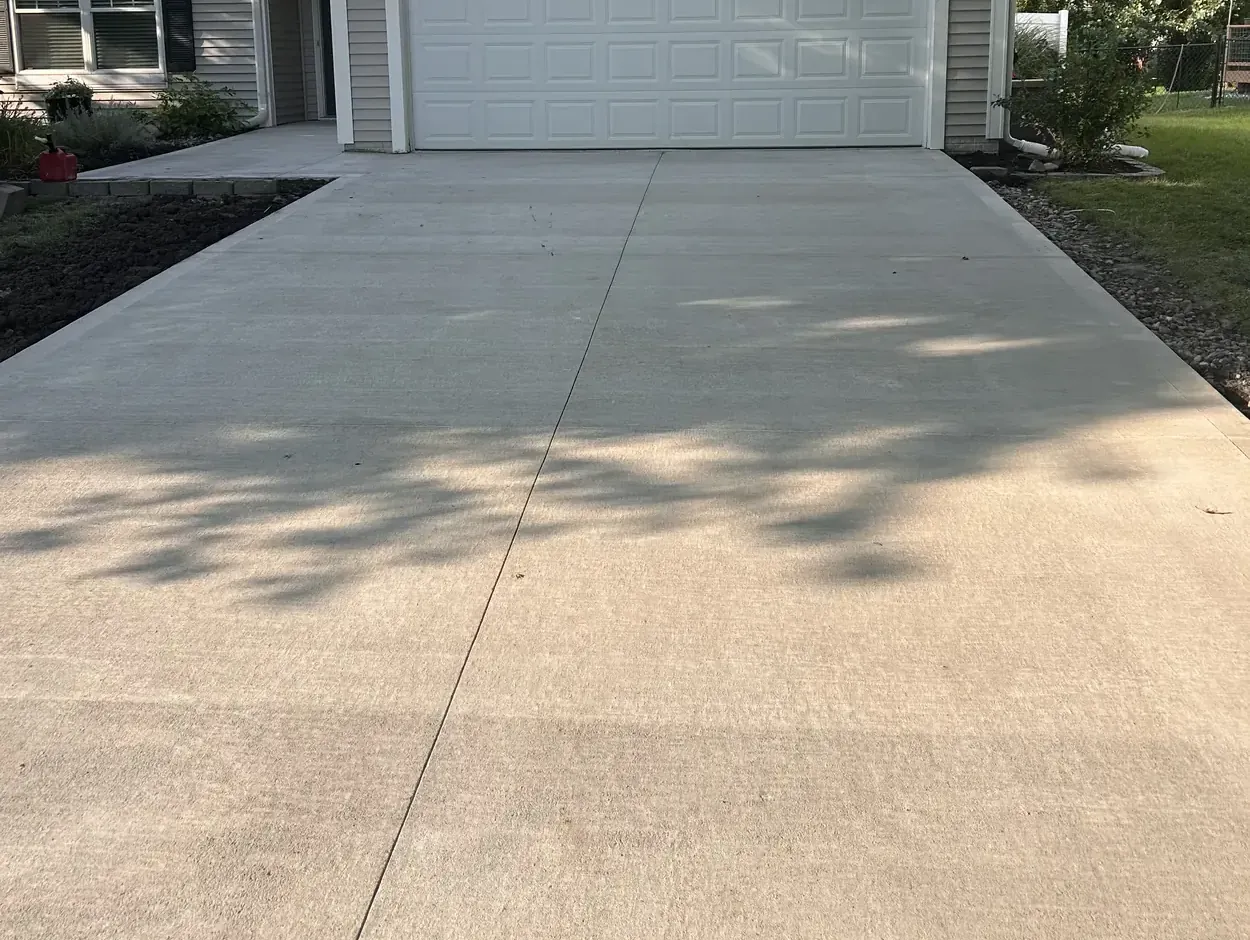
Control joints are cut so the concrete cracks in a straight line at the bottom of a groove, where you don’t see it, instead of wandering across the middle. Cut too shallow, too late, or in the wrong pattern and the concrete cracks where it wants to.
Anyone who tells you their concrete won’t crack is either new or not being straight with you.
Patios
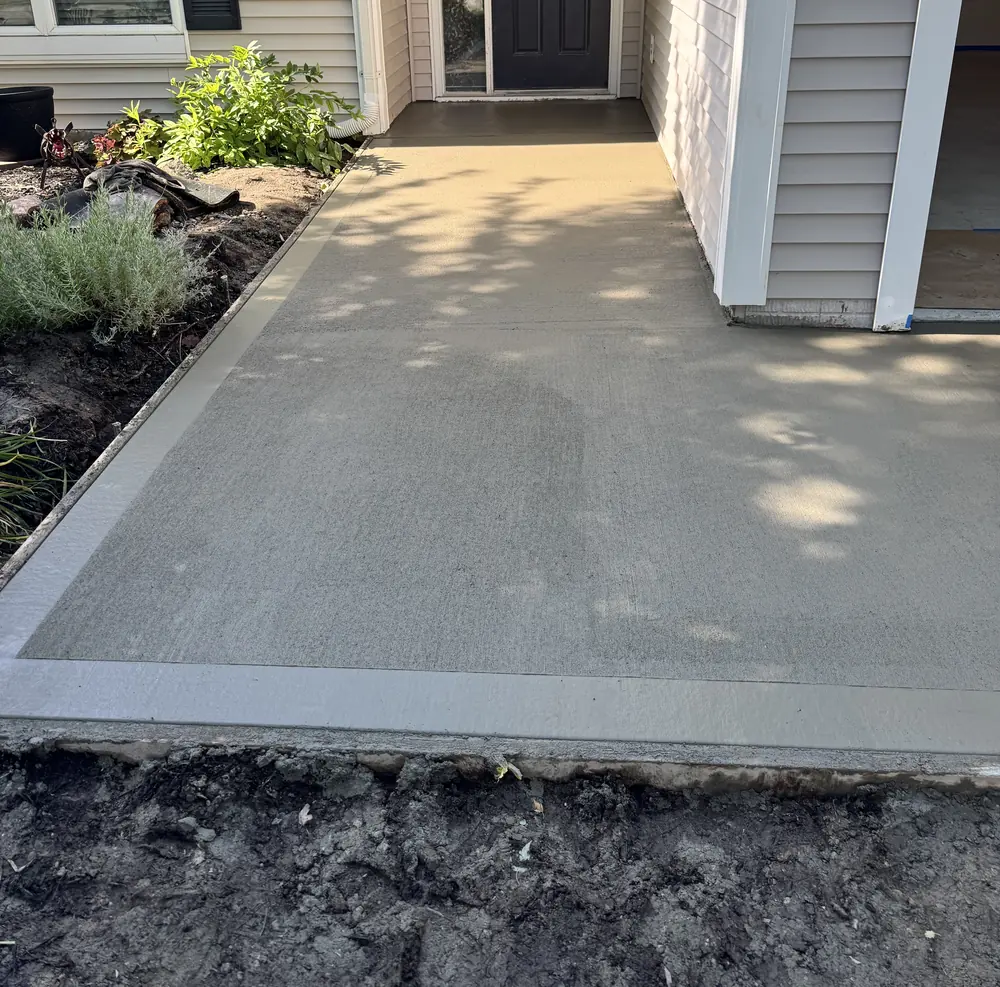
Same fundamentals, different priorities. A patio takes less weight than a driveway but gets looked at far more closely, so the finish and the joint layout matter more.
Worth thinking about before we pour: how the patio drains away from the house, where it meets existing concrete or the foundation, and whether you’re adding a fire pit, a hot tub, or footings later — all of those are easier to plan for now than to cut in afterwards.
What drives the price
- Square footage and thickness.
- Tear-out. Removing and hauling away old concrete is real labor and real disposal cost. A new pour on virgin ground is a different number.
- Base condition. If the subgrade is soft or wet, it needs fixing, and that is not optional.
- Access. Whether a truck can reach the pour or it has to be moved by hand or pump.
- Reinforcement sized to the load.
- Finish. A broom finish is standard; decorative finishes cost more.
Questions
How long before I can drive on it?
Longer than you want, and rushing it is how a new driveway gets damaged in its first week. You’ll have exact times in your written scope — separate ones for walking on it and for parking on it.
Will the new concrete match the old?
Not exactly. New concrete cures lighter and darkens over months, and cement color varies between batches. If part of the driveway is staying, we’ll tell you upfront how close it will get.
Should I seal it?
For exterior concrete in Iowa, sealing helps against salt if it’s the right product and it’s reapplied. It is not a substitute for a properly air-entrained mix. We’ll tell you what your driveway actually needs and when.
Can you do it in the winter?
Concrete placement is temperature-sensitive, and cold-weather pours need extra measures that cost more. Sometimes it’s the right call. Often waiting for spring is the better use of your money, and we’ll say so.